We inspect homes and buildings for termite activity and prepare reports; property size and report needs shape the typical $75–$200 fee. Spring storms can leave wet ground near Mississippi River State Park.
What to Do About Rodent Droppings in Kitchen Cabinets
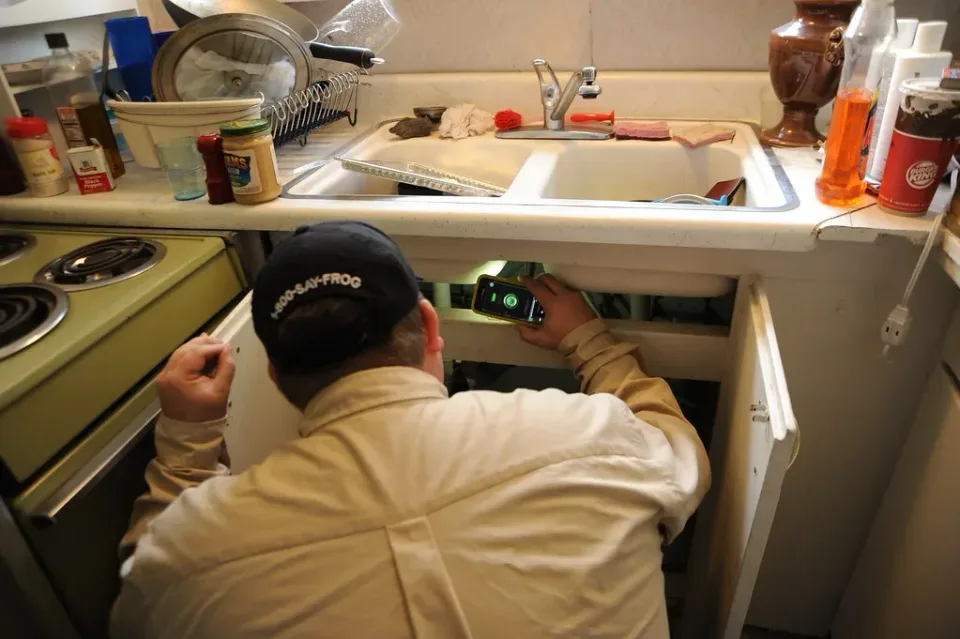
What Should You Do About Droppings in Kitchen Cabinets?
Rodent droppings inside a kitchen cabinet mean you should keep food and dishes away from the affected area and clean it carefully before using the cabinet again. Don’t sweep or vacuum dry droppings; dampen them first with an appropriate disinfectant and follow its label directions.
Wear disposable gloves, then bag the waste and cleaning materials securely. Arkansas has a humid subtropical climate, and hot, humid summers can increase indoor pest activity, so look for signs beyond the cabinet.
A customer saying, “I need somebody to come out and kill them,” often needs more than a quick spray: the droppings may point to access and food sources that need attention. We explain findings and treatment choices plainly. A termiticide is for termite control, not cleaning rodent waste, so don’t use one on a cabinet.
How Should You Clean Droppings from a Cabinet?
Take food, dishes, and utensils out of the affected cabinet and set aside anything with droppings on it. Keep children and pets away while you work.
Avoid dry sweeping or vacuuming, which can stir contaminated dust into the air. Instead, wet droppings and nearby surfaces with an appropriate disinfectant, allowing the product to sit for the contact time on its label.
Wear gloves, wipe up the material, and place it in a sealed bag. Clean the surface again as directed by the product label, then wash your hands.
Don’t mix cleaning chemicals. If droppings are extensive, the cabinet contains damaged materials, or you are unsure how to clean safely, pause and seek professional guidance.
What Signs Suggest the Problem Is Still Active?
A fresh-looking dropping is a reason to inspect, not proof by itself of where a rodent is entering. Check cabinet corners, the space beneath the sink, food packaging, and nearby floor edges for additional evidence or gnaw marks.
Store dry goods in sealed containers and remove crumbs or pet food that could sustain activity. Arkansas’s humid subtropical climate can make indoor pest activity more noticeable during hot, humid summers, so don’t assume a closed cabinet is protected from pests.
We look for conditions that help explain the evidence before recommending a response. For customers looking for rodent exclusion for Arkansas homes near me, the useful first question is where an entry point or travel route may be, not simply which product to apply.
When Should You Call for Rodent Removal?
If droppings return after cleaning, appear in several cabinets, or turn up alongside damaged packaging, contact a pest professional rather than relying on repeated household traps. The service called rodent removal should address the immediate activity and help determine what is allowing it to continue.
Rodent bait placements need careful consideration around kitchens, where food, children, and pets may be present. A tamper-resistant rodent bait station is designed to keep bait contained; its placement still needs to suit the site and be managed safely.
Ask what evidence supports the proposed method and what you should do before and after service. We document findings and explain the next steps. That is more useful than treating a cabinet without checking nearby areas.
How Does Exclusion Help Stop Repeat Activity?
Rodent exclusion means addressing openings and conditions that let rodents get inside, rather than only responding to those already present. The work may involve checking around plumbing, doors, utility lines, and cabinet-adjacent gaps, then discussing suitable repairs.
Autumn cooling can push rodents indoors, making it a sensible time to check for access points before activity appears in stored food. For an Arkansas home near Downtown Bentonville Square, for example, the practical inspection is still the house itself: its openings, interior evidence, and storage areas.
Our crew can explain which conditions we observed and which repairs may be needed. For a warehouse, rodent monitoring may also include routine checks at designated points, since stored goods and ongoing deliveries can create different inspection needs than a kitchen.
What Changes the Comparison Between DIY and a Professional?
A small, isolated area that can be cleaned safely may be manageable with gloves, careful wet cleanup, and label-directed disinfectant. Call a professional if signs recur, the source is unclear, or the problem extends beyond an accessible cabinet.
A pest professional can assess evidence and discuss trapping or exclusion based on the property rather than guessing from droppings alone. We have served Arkansas for more than 11 years and explain the inspection findings before recommending a plan.
For background on the company and how our crew approaches occupied homes, see Arkansas Pest Pros.
Which Cabinet Dropping Response Fits the Problem?
The right response depends on whether you need to clean a contained mess, capture a rodent, or address a way into the home. Check the likely entry points before choosing a control method.
Interstate 40 crosses Arkansas, but a route across the state does not change the need to assess each property’s access and evidence. A mouse can enter through a gap of about 1/4 inch; a rat may fit through about 1/2 inch.
| Option | Best for | Key detail |
|---|---|---|
| Careful cleanup | A small, contained area after activity is addressed | Wet droppings before wiping; don’t dry sweep or vacuum. |
| Snap traps | Capturing rodents where activity is confirmed | Placement should account for children, pets, and cabinet access. |
| Exclusion and trapping | Recurring signs or suspected entry points | Inspect openings; mouse gaps can be about 1/4 inch, rat gaps about 1/2 inch. |
Interstate 30 runs from Little Rock toward Texarkana, but the useful comparison is still the inspection of your own home. Around the Arkansas State Capitol in Little Rock, as elsewhere, look for actual entry points rather than assuming distance or location identifies the source.
How Do You Prepare for Rodent Droppings Cleanup?
You find droppings beside a food package in a cabinet. Keep people and pets away from the area, and don’t disturb the material while dry.
-
Separate food and dishes: Remove unaffected items and discard food or packaging that has been contaminated.
-
Record what you see: Note which cabinets and nearby areas show evidence, without sweeping or vacuuming it.
-
Ask about inspection tools: A borescope inspection camera may help a technician look into an inaccessible void without opening finished surfaces unnecessarily.
-
Prepare access: Clear items from the cabinet and nearby inspection areas so the technician can check the affected space.
-
Discuss the interior: Careful treatment around finished interiors matters when cabinets, flooring, or stored household items could be affected.
-
Clarify the service type: If the issue is in a shop or workplace, explain whether it is commercial; commercial pest control may call for a different monitoring plan than a single kitchen.
Belle Grove Historic District in Fort Smith is a local landmark, but the preparation that matters is the access and evidence inside your own home. Ask what needs to be moved and whether any area could not be inspected.
FAQ Section
What If Rodent Droppings in Kitchen Cabinets Keep Coming Back After Cleaning?
Recurring droppings mean the affected area should be checked for continued activity and conditions that could be supporting it, rather than cleaned repeatedly without investigating. Rain-soaked soil can drive ants indoors, but it does not explain rodent droppings; describe the cabinet location and any other rodent signs when arranging an inspection.
How Much Does Rodent Exclusion Cost After Droppings Appear in Kitchen Cabinets?
Rodent exclusion is listed at $200–$1,500, with the number of entry points and repair work affecting the quote. Ask the provider to identify the openings included in the plan and separate exclusion work from any trapping or removal.
Should I Clean Rodent Droppings in Kitchen Cabinets Myself or Call a Professional?
You can clean a small, contained area if you can wet the droppings, follow disinfectant label directions, and keep others away while working. Call Arkansas Pest Pros if evidence returns, appears in several places, or the source is unclear; we can inspect and explain the findings.
Do Arkansas Rules Apply to Pesticide Use for Rodents near Kitchen Cabinets?
Yes, pesticide use must follow applicable requirements, including the Arkansas Pesticide Use and Application Act and FIFRA pesticide label directions and restrictions. The Arkansas State Plant Board is a relevant state resource, and products should never be applied to food-contact surfaces contrary to their labels.
Do I Need Rodent Exclusion If Droppings Are Only Inside One Kitchen Cabinet?
Not automatically; one cabinet is a clue to inspect, not enough by itself to determine which service is needed. Rodent Exclusion may be appropriate if an inspection identifies an entry point, while Rodent Removal addresses confirmed activity; Arkansas Pest Pros can explain which finding supports the next step.
Ready to Get Help with Cabinet Droppings?
Droppings in a kitchen cabinet call for careful cleanup and a check for continued activity or an entry route. Don’t stir up dry material, and don’t rely on cleaning alone if new evidence appears.
Arkansas Pest Pros can inspect the affected area, explain what we find, and provide documented service recommendations suited to the property. We confirm visible activity and conditions that may be supporting it before discussing treatment.
Our crew serves homeowners across Arkansas, including communities near Buffalo National River and Crater of Diamonds State Park in Murfreesboro. If you need a discreet home pest service, tell us which cabinets are affected and whether signs have returned.
For a practical next step, contact Arkansas Pest Pros about Rodent Removal.
Services Offered
Services We Offer in Little Rock, AR
Explore related services available in Little Rock, AR.
Mosquito Control treats outdoor areas around homes; yard size and visit frequency shape typical $75–$150 service costs. Northern Arkansas cold and occasional ice storms can affect scheduling.
Cockroach Extermination targets roaches in kitchens, bathrooms, and utility spaces; typical treatment runs $100–$400 depending on infestation level and follow-up needs.
Rodent removal for homeowners and property managers covers indoor activity and contaminated cabinet areas; access and cleanup needs shape the job.
Liquid soil barriers and monitored bait stations that stop subterranean termites at the foundation, typically $800–$3,000 depending on structure size and treatment method.
Flea Treatment addresses activity in carpeted rooms and pet areas; typical U.S. service runs about $150–$400, depending on home size and treatment scope.
We remove accessible wasp nests from eaves, sheds, and other residential sites; height and safe ladder access affect typical $150–$500 jobs.
Spider Treatment targets indoor and exterior hiding places, including webbed eaves and porch corners; typical visits run $150–$500, depending on home size and access.
Fire ant treatment covering mound elimination, broadcast baiting, and follow-up checks for Arkansas lawns; cost depends on yard size and colony count.
Carpenter ant treatment locates and treats nests in damp framing, trim, and voids, plus moisture fixes to stop reinfestation; cost depends on nest access and how many colonies are active.
Bed bug treatment covering mattresses, box springs, furniture seams, and baseboard cracks, priced $300–$1,500 depending on rooms affected and infestation severity.
Kitchen and cabinet pantry moth treatment: inspection, targeted shelf treatment, and follow-up visits, priced by pantry size and infestation depth. Typical jobs run $100–$400 across Arkansas.
Cities & Towns
Service Areas in Little Rock
Select a city to find local pest control providers we cover in Little Rock.
Green Forest, AR72638Cherokee Village, AR72529Pottsville, AR72858Booneville, AR72927DeWitt, AR72042Cave Springs, AR72718Camden, AR71701Wynne, AR72396Bryant, AR72022Little Rock, AR72204Ozark, AR72949West Memphis, AR72301Johnson, AR72762Judsonia, AR72081Waldron, AR72958Kensett, AR72082Prescott, AR71857Mountain Home, AR72653Newport, AR72112Cabot, AR72023Salem, AR72019Prairie Grove, AR72730Nashville, AR71852Benton, AR72015
Show all 149 cities
Elkins, AR72701Atkins, AR72823Barling, AR72923Jacksonville, AR72099Goshen, AR72703Leachville, AR72438Southside, AR72501Trumann, AR72472Osceola, AR72370Centerton, AR72719Little Flock, AR72756Manila, AR72442Cave City, AR72521Conway, AR72035East End, AR72065Malvern, AR72104Lincoln, AR72744Rogers, AR72758Stuttgart, AR72160Hamburg, AR71646Beebe, AR72012Dumas, AR71639Lavaca, AR72941Clinton, AR72031Corning, AR72422Ward, AR72007
Get a Quote
Get a Pest Control Quote in Little Rock, AR
Share job details below or call our team directly. Phone: (855) 681-0299