We inspect homes and buildings for termite activity and prepare reports; property size and report needs shape the typical $75–$200 fee. Spring storms can leave wet ground near Mississippi River State Park.
What Termite Mud Tubes on an Arkansas Foundation May Mean
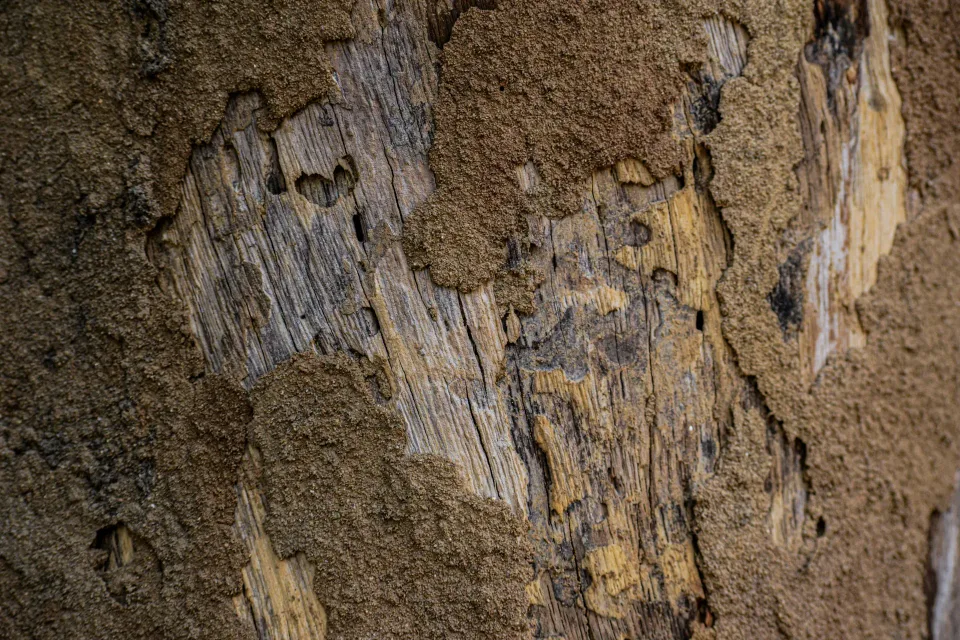
Are Mud Tubes on My Foundation an Emergency?
You spot a pencil-width brown line creeping up the concrete where your siding meets the slab that’s a mud tube, and it means termites have built a highway between the soil and your home. A mud tube does not always mean an active infestation, but it always justifies a professional inspection. Because Arkansas is inland with no coastal climate pattern, our humid subtropical weather gives subterranean termites a long working season, and wet springs around places like Fayetteville can push swarming activity right up against foundations near the University of Arkansas campus.
We’ve opened plenty of these tubes with a putty knife: some collapse empty, others are full of live workers. Arkansas Pest Pros inspects, documents, and tells you plainly which situation you have before any treatment is discussed.
Why Does Wet Spring Weather Make Swarming Worse in Arkansas?
Subterranean termites build mud tubes to travel safely between soil and the wood they feed on, staying moist and protected from predators. Finding one on your foundation means the colony reached your structure the question is whether it’s still working. A single colony can hold thousands to millions of termites, so we never assume a lone tube is a fluke.
Wet spring weather can increase termite swarming, and Arkansas gets plenty of it. Spring thunderstorms soak the soil, and a few weeks later winged swarmers emerge looking for a place to start new colonies.
If you find discarded wings on a sill and a tube on the slab in the same season, that combination is a strong signal to schedule a termite inspection rather than wait. Homeowners near the Arkansas State Capitol in Little Rock and around Arkansas State University in Jonesboro call us most often in those wet weeks for exactly this reason.
Do Mud Tubes Mean the Same Thing in Northern and Southern Arkansas?
No, the season shapes what we find. Northern Arkansas typically sees colder winter temperatures, so activity in towns like Harrison often pauses or slows until the soil warms.
Southern Arkansas generally has milder winters, which means colonies near El Dorado or Texarkana can keep feeding through months when northern colonies go quiet. Either way, tubes don’t disappear on their own a dormant tube can reactivate once temperatures rise.
Should You Break Open a Mud Tube Yourself?
You can check one tube, but you shouldn’t diagnose from it. Scrape a small section with a screwdriver: active tubes will be rebuilt within days, often with live workers inside. The step most homeowners skip is documenting where every tube sits and photographing the foundation before cleanup that record is gold for an inspector.
What DIY checks can’t do is find the hidden feeding: termite damage may remain hidden behind finished surfaces, and a tube near a porch can point to activity under flooring you’d never suspect. That’s when you call a pro with a moisture meter and borescope rather than a guess.
When to DIY vs. Call a Professional
Checking and photographing tubes: fine as a first step. But treating termites involves termiticide rates that follow product-label directions, trenches dug to label-specified dimensions, and bait station placement spaced per the product label.
One client on an older block foundation had wood-to-soil contact at a crawlspace door frame no store product reaches that properly. We’ve written more on baiting systems in our Sentricon baiting guide, and our termite treatment team handles the licensed applications. Annual inspections can help identify new termite activity before tubes return.
Which Termite Treatment Option Fits Your Foundation?
Once inspection confirms live termites, the choice usually comes down to a liquid soil barrier versus a baiting system. Our state’s freeze-thaw cycles can open gaps around foundations, so any barrier has to account for new cracks that appear after hard winters we see this along older homes near the Eureka Springs Historic District and in rentals around Craighead Forest Park in Jonesboro.
Property type matters too: hotels and lodging properties in tourist towns often prefer bait systems because they avoid trenching near guest areas, and the monitoring approach aligns with international pest-management standards many franchises follow. Homes along Interstate 40 corridors sit on varied soils that change how liquid treatments perform.
| Option | Best for | Key detail |
|---|---|---|
| Liquid soil treatment | Fast colony kill at foundations with accessible soil | Trench dug to label-specified dimensions around the perimeter |
| Termite baiting system | Slabs, wells, or properties where trenching is impractical | Bait station spacing follows product-label specifications; needs ongoing monitoring |
| Wood-destroying insect inspection | Real estate deals or annual checks | Identifies evidence; treatment is a separate, selected method |
| Rodent exclusion | Homes where tubes and entry gaps coexist | Mouse entry gaps run approximately 1/4 inch, rat gaps about 1/2 inch |
How Do You Prepare for a Termite Inspection?
Picture this: you found two tubes along your back foundation wall after a storm, and an appointment is set for Thursday. Good prep makes the visit faster and the findings more complete we treat occupied homes like they’re ours, and preparation protects pets and family during any label-directed application.
-
Confirm visible activity: Note tube locations and any discarded wings, and confirm affected rooms before we arrive.
-
Clear access to baseboards: Move stored items and boxes at least two feet from walls so inspection areas are reachable.
-
Secure pets and aquariums: Cover tanks and move pets out of treatment zones before work begins.
-
Identify wells, drains, and sensitive habitats: Tell us about wells or gardens so treatment planning avoids them.
-
Document inaccessible areas: Crawlspace openings, locked storage, and finished walls get recorded as inspection limitations.
-
Schedule re-entry per the label: Re-entry timing follows the product label, not a guess.
-
Arrange follow-up inspection: Bait activity may take weeks to assess, so monitoring visits get booked before we leave.
Ask any provider whether they follow Arkansas licensing rules the same discipline applies whether the job is carpenter bee treatment, cockroach extermination, or a discreet visit to a rental near Bathhouse Row in Hot Springs. Emergencies like a swarm inside a living room can be called in, but tubes usually allow scheduled work. Memberships like the Entomological Society of America keep our methods current.
FAQ Section
What If the Mud Tube on My Foundation Is Dry and Crumbling Does That Mean the Termites Are Gone?
No a dry tube means the tube is inactive, not that the colony has left your property. Termites commonly abandon and rebuild tubes in new locations, and the main colony lives in the soil where you can’t see it. We recommend a termite inspection with a moisture meter to check for active feeding behind finished surfaces before you write it off.
How Much Does Termite Treatment Cost in Arkansas?
Termite treatment typically runs $800–$3,000 depending on structure size and treatment method, and a termite inspection generally costs $75–$200 based on property size and report needs. Liquid soil treatments and baiting systems land at different points in that range. Final quotes vary by infestation level, property access, and site conditions.
Can I Scrape Off Mud Tubes and Treat Termites Myself with Store Products?
Yes, you can scrape a tube to test for activity, but DIY treatment rarely reaches the colony. Termiticide application rates follow product-label directions, and liquid treatment trenches must be dug to label-specified dimensions hard to replicate with retail gear on a slab perimeter. Arkansas Pest Pros handles licensed applications and documents inaccessible areas so nothing gets missed.
Who Regulates Termite Treatment Companies in Arkansas?
The Arkansas State Plant Board enforces the Arkansas Pesticide Use and Application Act and structural pest control licensing rules for termite work. Termiticides must also be EPA-registered products applied according to FIFRA label directions and restrictions. Ask any provider for their Arkansas Department of Agriculture applicator licensing before signing a contract.
After Termite Treatment, DO I Need Other Pest Control Services for My Arkansas Home?
Often yes the same humid conditions that support termites invite other pests. High summer humidity can promote wood decay that draws carpenter ants and carpenter bees, and homeowners near Crystal Bridges Museum of American Art in Bentonville or Donald W. Reynolds Razorback Stadium in Fayetteville commonly add mosquito control or rodent exclusion to their plan. Arkansas Pest Pros can bundle services during the same visit to keep costs down.
Ready to Get a Straight Answer About Those Tubes?
A mud tube on your foundation is a finding, not a verdict but it deserves a real inspection, not a wait-and-see. Because subterranean termite colonies can hold thousands to millions of termites and termite damage may remain hidden behind finished surfaces, we start every job with a detailed property assessment instead of a one-size spray.
DIY pest treatment around termites tends to cost more in the long run; label-directed termiticide work and bait monitoring need professional equipment and follow-through. And while autumn cooling can push rodents indoors as a separate seasonal problem, termites stay on our radar year-round in Arkansas’s mild-winter south.
Arkansas Pest Pros builds facility-specific service plans for each home call (855) 681-0299 or request a quote through our termite inspection page and get findings explained plainly.
Services Offered
Services We Offer in Little Rock, AR
Explore related services available in Little Rock, AR.
Mosquito Control treats outdoor areas around homes; yard size and visit frequency shape typical $75–$150 service costs. Northern Arkansas cold and occasional ice storms can affect scheduling.
Cockroach Extermination targets roaches in kitchens, bathrooms, and utility spaces; typical treatment runs $100–$400 depending on infestation level and follow-up needs.
Rodent removal for homeowners and property managers covers indoor activity and contaminated cabinet areas; access and cleanup needs shape the job.
Liquid soil barriers and monitored bait stations that stop subterranean termites at the foundation, typically $800–$3,000 depending on structure size and treatment method.
Flea Treatment addresses activity in carpeted rooms and pet areas; typical U.S. service runs about $150–$400, depending on home size and treatment scope.
We remove accessible wasp nests from eaves, sheds, and other residential sites; height and safe ladder access affect typical $150–$500 jobs.
Spider Treatment targets indoor and exterior hiding places, including webbed eaves and porch corners; typical visits run $150–$500, depending on home size and access.
Fire ant treatment covering mound elimination, broadcast baiting, and follow-up checks for Arkansas lawns; cost depends on yard size and colony count.
Carpenter ant treatment locates and treats nests in damp framing, trim, and voids, plus moisture fixes to stop reinfestation; cost depends on nest access and how many colonies are active.
Bed bug treatment covering mattresses, box springs, furniture seams, and baseboard cracks, priced $300–$1,500 depending on rooms affected and infestation severity.
Kitchen and cabinet pantry moth treatment: inspection, targeted shelf treatment, and follow-up visits, priced by pantry size and infestation depth. Typical jobs run $100–$400 across Arkansas.
Cities & Towns
Service Areas in Little Rock
Select a city to find local pest control providers we cover in Little Rock.
Mena, AR71953Walnut Ridge, AR72476Hot Springs Village, AR71909Southside, AR72501Magnolia, AR71753Lake Hamilton, AR71913Gravette, AR72739Prairie Creek, AR72756Gentry, AR72734Batesville, AR72501Farmington, AR72730Centerton, AR72719Piney, AR71913Sheridan, AR72150Cave City, AR72521Johnson, AR72762Clarksville, AR72830Marianna, AR72360Newport, AR72112Huntsville, AR72740Waldron, AR72958Kensett, AR72082Barling, AR72923Landmark, AR72206
Show all 149 cities
Ward, AR72007Osceola, AR72370Fort Smith, AR72903Greenbrier, AR72058Rockwell, AR71913Harrisburg, AR72432Lake Village, AR71653Trumann, AR72472Lincoln, AR72744Bentonville, AR72712Monticello, AR71655Bay, AR72411Malvern, AR72104Fayetteville, AR72701Jonesboro, AR72467North Little Rock, AR72116Lonoke, AR72086Hamburg, AR71646Nashville, AR71852Marked Tree, AR72365Clinton, AR72031Corning, AR72422England, AR72046Helena-West Helena, AR72390Elm Springs, AR72762Warren, AR71671
Get a Quote
Get a Pest Control Quote in Little Rock, AR
Share job details below or call our team directly. Phone: (855) 681-0299