We inspect homes and buildings for termite activity and prepare reports; property size and report needs shape the typical $75–$200 fee. Spring storms can leave wet ground near Mississippi River State Park.
Discarded Termite Wings near Little Rock Windows: Swarm or Warning?
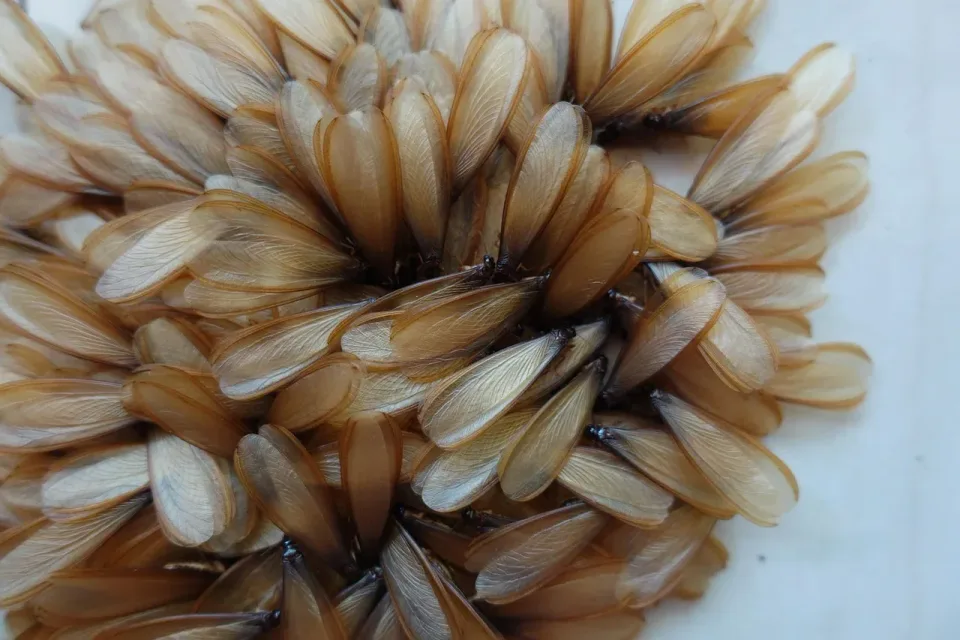
Do Wings at Little Rock Windows Signal Termites?
Discarded wings beside a window can mean termite swarmers have emerged nearby, but the wings alone do not confirm an active infestation. Save a few, note where you found them, and look for live insects or other signs before disturbing the area. A termite inspection in Little Rock, AR helps establish whether the evidence points to termites and whether treatment is appropriate; the inspection price can depend on property size and report needs.
Near the Arkansas State Capitol, as across the city, spring weather can make seasonal pest activity more noticeable, while Arkansas’s humid subtropical climate can create conditions that support household pest concerns. Arkansas Pest Pros checks the evidence and explains the findings before recommending a next step.
What Do Wings near a Little Rock Window Mean?
Wings on a sill or floor may be evidence of a termite swarmer, but they are not proof by themselves. Look for matching insects, damaged wood, or other signs, and keep the wings in a bag or take a clear photo.
Avoid spraying the spot first; that can remove evidence our crew would use to understand what is happening. We have seen homeowners sweep away the wings and then struggle to show where they appeared.
A little documentation helps. Around Little Rock Central High School National Historic Site, older and newer homes alike deserve an inspection based on the actual structure, not an assumption drawn from one clue.
Could There Be Signs Beyond the Windowsill?
Check nearby window trim and accessible wood for soft, blistered, or hollow areas, but do not pry open finished surfaces. Termite damage may be hidden behind them, so a clean-looking room does not rule out a problem.
If you see a mud tube along the foundation, record its location and avoid breaking it before an inspection. That detail can help distinguish activity from old damage.
Our crew looks at accessible areas and notes limitations, including blocked sections. Homeowners near the Old State House Museum can use the same practical approach as anywhere in Little Rock: record what you see, then arrange a careful check rather than guessing from a single mark.
When Should You Call for an Inspection?
Call for a professional assessment when wings recur, live swarmers appear indoors, or you find other signs such as a mud tube or damaged wood. An annual termite inspection can help identify new activity; it is especially useful when you want a documented baseline for a home.
It does not mean treatment is automatically needed. We explain what we observed and separate evidence from uncertainty, so you can make a decision based on the property.
For broader residential pest control in Little Rock, ask which findings are termite-related and which may need a different response. That keeps the proposed work focused instead of turning one windowsill discovery into a blanket treatment recommendation.
Can You Handle the First Steps Yourself?
You can photograph the wings, collect a small sample, and check visible areas without disturbing them. Stop before applying pesticide or opening walls.
Call a pro if evidence returns, if you find a mud tube, or if damaged wood is difficult to assess safely. Our crew can inspect the structure and explain whether termite treatment for the home is warranted; the selected method should fit the confirmed activity and property conditions.
For context on another common sign, read what termite mud tubes on an Arkansas foundation may mean. If ants are also appearing indoors, describe where and when you see them rather than treating every insect as the same problem.
Little Rock’s hot, humid summers can increase indoor pest activity, so accurate identification matters.
Which Termite Option Fits Wings by a Window?
If wings appear once and there are no other signs, begin with an inspection rather than choosing a treatment by guesswork. Wet spring weather can increase termite swarming, but it does not establish that a colony is in the structure. Options differ in purpose:
| Option | Best for | Key detail |
|---|---|---|
| Wood-destroying insect inspection | Checking wings and other evidence | Identifies findings; does not itself apply control |
| Subterranean termite liquid treatment | Confirmed activity where a treated soil zone is suitable | Trench dimensions and application follow product-label directions |
| Termite baiting system | Monitoring and control through stations | Station placement follows product-label specifications |
| Fire ant mound treatment | Separate lawn mounds, not window wings | Addresses a different pest and problem |
A restaurant near the River Market District may need a different inspection plan than a residence because access and use differ. Ask what evidence supports the recommendation, what areas are included, and whether the scope is termite control or another service. For other seasonal signs, read about wasp nest removal in Little Rock.
Prepare the Window Evidence for Inspection
-
Document the wings: Photograph the sill and nearby floor, and note the date and room before cleaning the evidence. This gives the termite inspection a useful starting point.
-
Keep a sample: Place a few loose wings in a small sealed container; do not crush or spray them.
-
Separate inspection from treatment: Inspection evaluates evidence, while termite treatment applies a chosen control method only when findings support it. Ask which service the appointment includes.
-
Make access clear: Move stored items away from the window, baseboards, and other inspection areas so the technician can see the surfaces.
-
Share building history: Tell the inspector about repairs, additions, or prior treatments. Homes in the Eureka Springs Historic District show why building details matter; the same principle applies when evaluating any structure.
-
Review the findings: Ask what was accessible, what could not be inspected, and whether follow-up is recommended. Do not treat suspected termite damage as confirmed until the evidence is assessed.
FAQ Section
What If I Find Discarded Termite Wings near a Little Rock Window but No Live Insects?
Finding discarded wings without live insects can still justify checking the window area and saving a sample for identification. Arkansas is inland, without coastal climate patterns, but that does not remove the need to assess a specific home for termite evidence.
How Much Does Termite Treatment Cost After Wings Appear near My Window?
Termite treatment is commonly $800–$3,000, with the structure’s size and the treatment method affecting the quote. Wings alone do not establish that treatment is needed, so an inspection can help identify the evidence and the appropriate scope.
Can I Clean Up Discarded Termite Wings Myself, OR Should I Call Pest Control?
Yes, you can photograph and collect loose wings, but avoid spraying or disturbing nearby suspected damage before the inspection. Call Arkansas Pest Pros if wings recur or you find other signs, so our crew can assess the evidence and explain the next step.
Do Arkansas Rules Affect Termite Treatment After I Find Window Wings?
Yes, Arkansas structural pest control licensing rules and the Arkansas Pesticide Use and Application Act are relevant to professional structural pest work. Pesticide applications must also follow FIFRA label directions and restrictions; ask the provider to explain the proposed product and treatment scope.
Should I Ask About Termite Treatment or Termite Inspection After Finding Window Wings?
Start with Termite Inspection when you have wings but do not know whether activity is present; it evaluates evidence rather than automatically applying a control method. If findings support treatment, Arkansas Pest Pros can explain the recommended Termite Treatment and what the work covers.
Should You Book a Termite Inspection for Window Wings?
If you have found discarded wings beside a window, save the evidence and arrange an inspection when it returns or appears alongside other signs. A home pest inspection should explain what was checked and what could not be accessed, so the next step is clear.
Termite bait stations are one possible option when the findings and site suit them; they require monitoring rather than a one-time placement. In Arkansas, local conditions vary, and a home near Garvan Woodland Gardens in Hot Springs has the same need for a property-specific assessment as a Little Rock home.
Ask us what the inspection covers and what evidence would justify treatment. Contact Arkansas Pest Pros to arrange a Termite Inspection.
Services Offered
Services We Offer in Little Rock, AR
Explore related services available in Little Rock, AR.
Mosquito Control treats outdoor areas around homes; yard size and visit frequency shape typical $75–$150 service costs. Northern Arkansas cold and occasional ice storms can affect scheduling.
Cockroach Extermination targets roaches in kitchens, bathrooms, and utility spaces; typical treatment runs $100–$400 depending on infestation level and follow-up needs.
Rodent removal for homeowners and property managers covers indoor activity and contaminated cabinet areas; access and cleanup needs shape the job.
Liquid soil barriers and monitored bait stations that stop subterranean termites at the foundation, typically $800–$3,000 depending on structure size and treatment method.
Flea Treatment addresses activity in carpeted rooms and pet areas; typical U.S. service runs about $150–$400, depending on home size and treatment scope.
We remove accessible wasp nests from eaves, sheds, and other residential sites; height and safe ladder access affect typical $150–$500 jobs.
Spider Treatment targets indoor and exterior hiding places, including webbed eaves and porch corners; typical visits run $150–$500, depending on home size and access.
Fire ant treatment covering mound elimination, broadcast baiting, and follow-up checks for Arkansas lawns; cost depends on yard size and colony count.
Carpenter ant treatment locates and treats nests in damp framing, trim, and voids, plus moisture fixes to stop reinfestation; cost depends on nest access and how many colonies are active.
Bed bug treatment covering mattresses, box springs, furniture seams, and baseboard cracks, priced $300–$1,500 depending on rooms affected and infestation severity.
Kitchen and cabinet pantry moth treatment: inspection, targeted shelf treatment, and follow-up visits, priced by pantry size and infestation depth. Typical jobs run $100–$400 across Arkansas.
Cities & Towns
Service Areas in Little Rock
Select a city to find local pest control providers we cover in Little Rock.
Jonesboro, AR72467Beebe, AR72012Walnut Ridge, AR72476Hot Springs, AR71913Gentry, AR72734Bella Vista, AR72715Arkadelphia, AR71999Prairie Grove, AR72730East End, AR72065Berryville, AR72616Paragould, AR72450North Little Rock, AR72116Shannon Hills, AR72103England, AR72046Pocahontas, AR72455Blytheville, AR72315Salem, AR72019Dermott, AR71638Cabot, AR72023Landmark, AR72206Holiday Island, AR72631White Hall, AR71602Cave City, AR72521Centerton, AR72719
Show all 149 cities
Lake Village, AR71653Lincoln, AR72744Bono, AR72416Southside, AR72501Van Buren, AR72956Mountain View, AR72560Lonoke, AR72086Fayetteville, AR72701Magnolia, AR71753Osceola, AR72370Fordyce, AR71742Vilonia, AR72173Barling, AR72923Mountain Home, AR72653Warren, AR71671Bentonville, AR72712Hoxie, AR72476Springdale, AR72762Wynne, AR72396Heber Springs, AR72543Newport, AR72112Booneville, AR72927Ozark, AR72949Pottsville, AR72858Gravette, AR72739Judsonia, AR72081
Get a Quote
Get a Pest Control Quote in Little Rock, AR
Share job details below or call our team directly. Phone: (855) 681-0299